Automotive UX · Human–AI Interaction · User Research
Context-Aware Communication for Automated Driving
2026 – Present | Ph.D. Dissertation Research | Purdue University
Data Collection Completed · Analysis in Progress
Overview
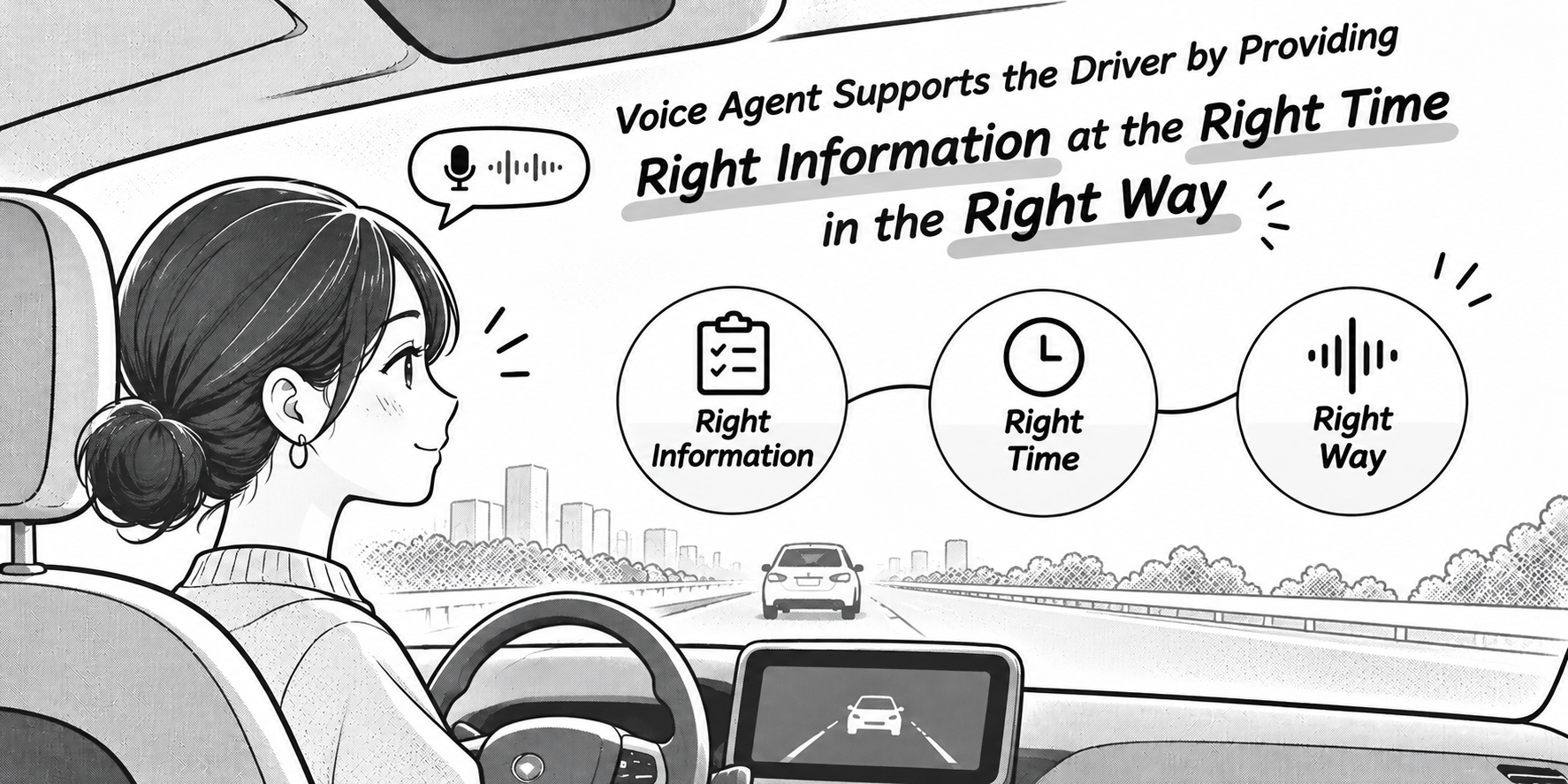
How can intelligent vehicles deliver the right information at the right time?
As vehicles become increasingly intelligent and automated, effective communication between humans and vehicles becomes essential. When a driving situation requires human attention or decision-making, the information provided by the system should be relevant, timely, and aligned with the user’s needs.
This project investigates how different communication strategies and driving contexts shape users’ information needs, situation awareness, and decision-making. The goal is to develop a deeper understanding of how intelligent vehicles can communicate effectively without overwhelming users with unnecessary information.
Research Approach
I designed and conducted a driving-simulator study to examine how the effectiveness of in-vehicle communication strategies varies across driving contexts.
The study combines controlled user experiments, behavioral performance measures, eye-tracking, and subjective evaluations to understand how users perceive, interpret, and respond to information delivered by intelligent vehicle systems.
My Role
Lead Researcher
I led the study from conceptualization through data collection, with guidance from my advisor and support from my undergraduate research assistant.
- Research conceptualization and experimental design
- In-vehicle communication design and interactive prototyping
- Driving-simulator scenario development and pilot testing
- Participant recruitment and user study execution
- Data collection and analysis planning
Expected UX Contributions
This research aims to inform the design of context-aware automotive communication systems that adapt information delivery to situational demands and users’ cognitive needs.
The anticipated outcomes include design insights for improving information relevance, communication clarity, and human–vehicle coordination across different driving contexts.
Research Recognition
Supported by the 2026 Human Factors and Ergonomics Society (HFES) Perception and Performance Technical Group Student Research Grant.